
Bukchon & Samcheong-dong
Hanok alleys between two palaces
🕙 This walk passes Bukchon's residential Red Zone (Bukchon-ro 11-gil), open to visitors 10:00–17:00 only. Fines apply outside these hours.
Welcome to Bukchon.
You should be standing at the gate of the Bukchon Culture Center, on Gyedong-gil.
Look up at the gate for a moment.
This house has two names.
The first is the Min Finance Official's House.
It was built in 1921 as the family home of Min Hyeong-gi, a government finance official.
The second is the Lady of Gyedong's House.
The Lady of Gyedong was what people called Yi Gyu-suk, a daughter-in-law of the family.
So a house built by a man in government ended up with a nickname that points to a daughter-in-law.
Yi Gyu-suk was born when Korea still had an emperor, and she lived on into the twenty-first century.
One life, stretched across an entire century.
To see why her nickname is a little surprising, look at how the house is laid out.
This is a hanok, a traditional Korean house, and it isn't one building but several wings, each with its own job.
At the front and at the back are the servants' wings, where the household staff lived.
The sarangchae is the men's wing, where the master of the house received his guests.
The anchae, literally the inner wing, belonged to the lady of the house and the women of the family.
And there's a sadang, a small shrine for the family's ancestors.
Every part of a well-to-do family home of that time is still here.
If you go in, stand in front of the inner wing for a moment.
Its very name means inside, the part of the house a visitor was least likely to see.
And yet the title of a woman from that inner side became one of the names for the whole house.
Now, a little about the neighborhood.
Bukchon simply means north village: it lies north of Cheonggyecheon, the stream that runs through downtown Seoul, and north of Jongno, the old main street.
It sits between two royal palaces, Gyeongbokgung to the west and Changdeokgung to the east.
Under the Joseon dynasty, Korea's last royal dynasty, high officials and powerful families settled here, close to the court.
One more name puzzle. This neighborhood is called Gyedong. Any guesses where that came from?
Here's a hint: a medical office.
In the Joseon era there was a medical institution called Jesaengwon, so the area became Jesaeng-dong. Dong just means neighborhood.
Over time people said it as Gyesaeng-dong, and then it got clipped down to plain Gyedong.
Say a name often enough, and it wears down like a pebble.
Our next stop is up the hill, in Gahoe-dong.
This house had two names. The next one carries a man's name.
But he isn't the one who built it.
Who did? I'll tell you at the gate.
When you're ready, walk north along Gyedong-gil.
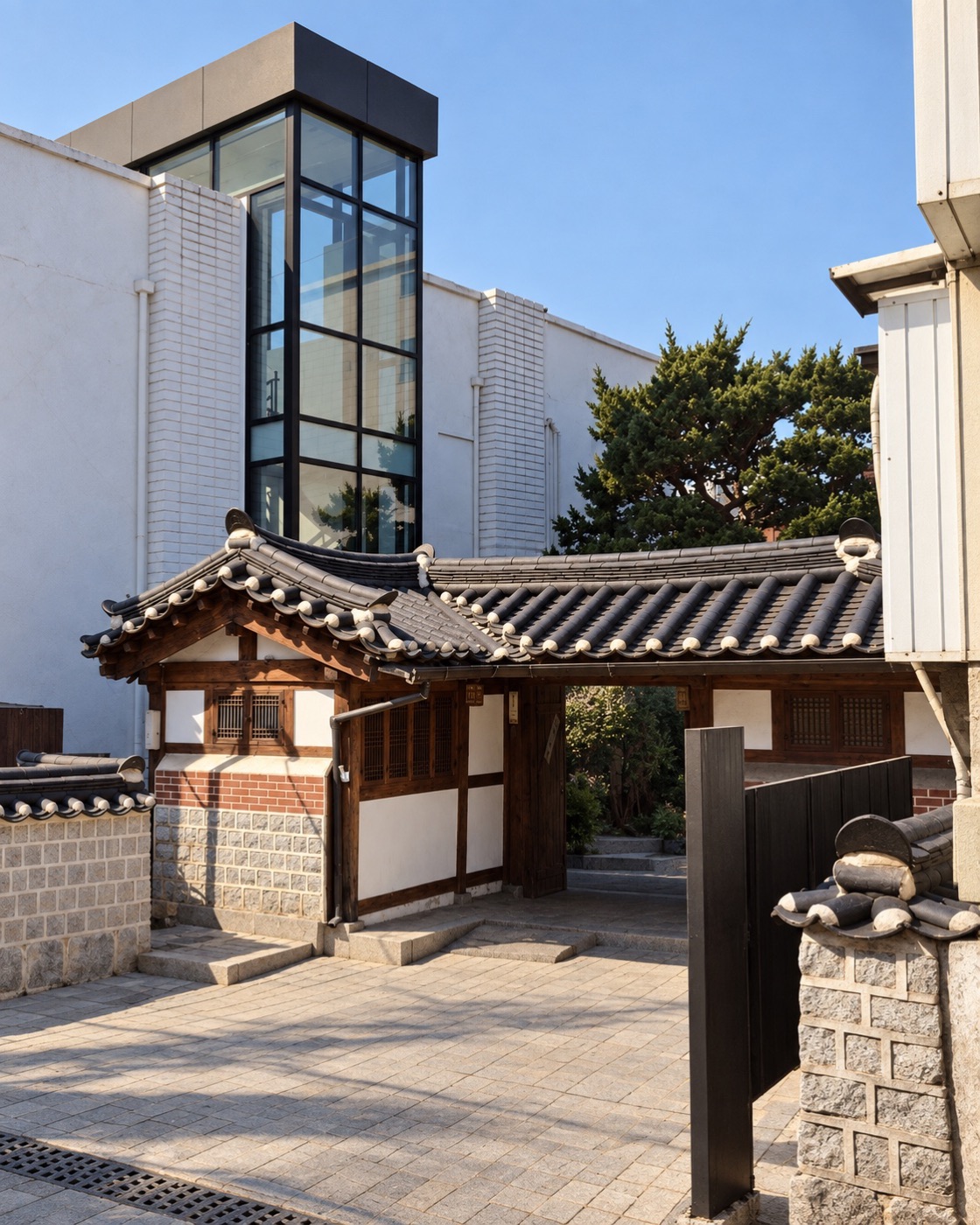 1. Bukchon Culture CenterGyedong · 1921 · A family home
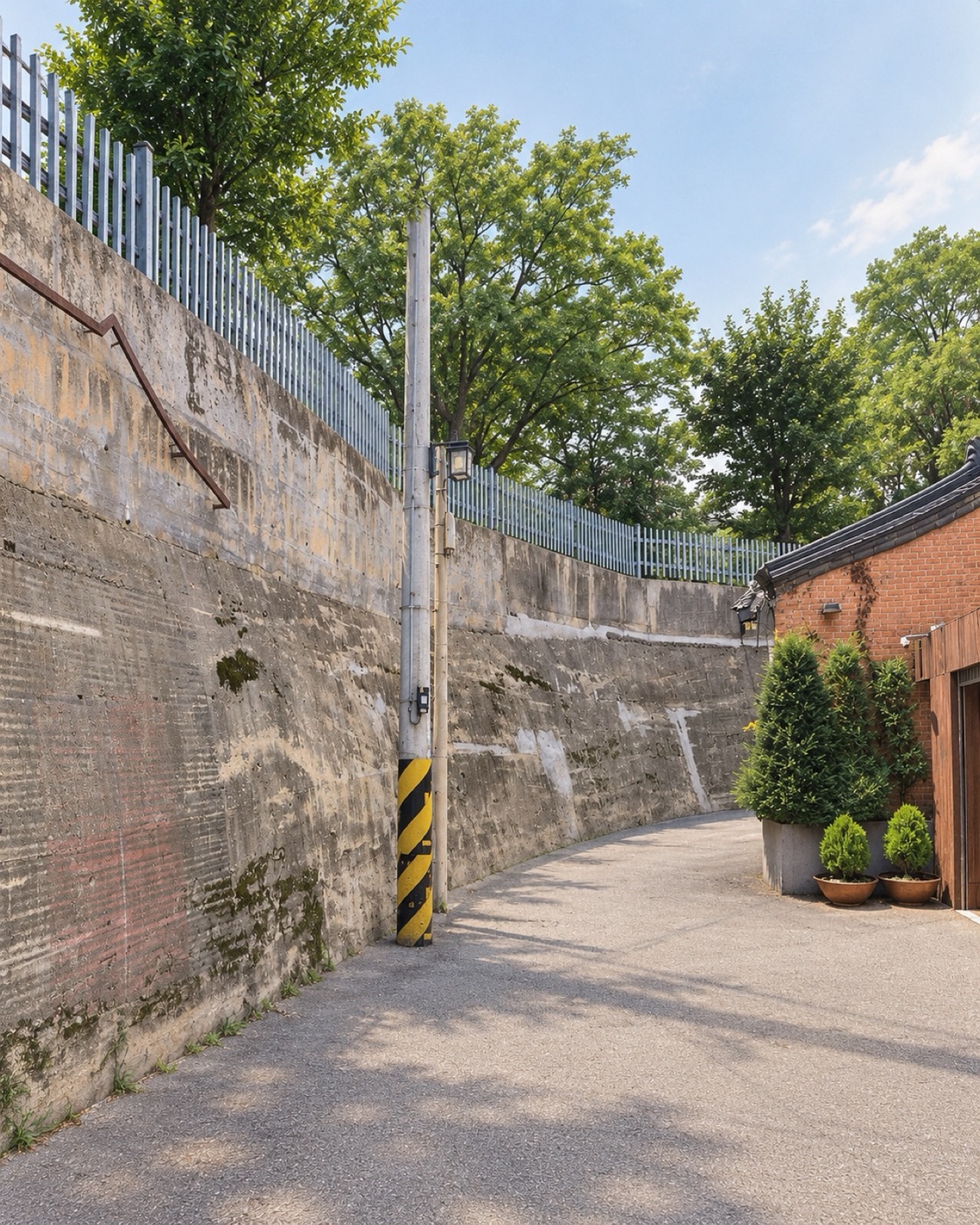 2. Baek In-je HouseGahoe-dong · 1913 · A banker's mansion
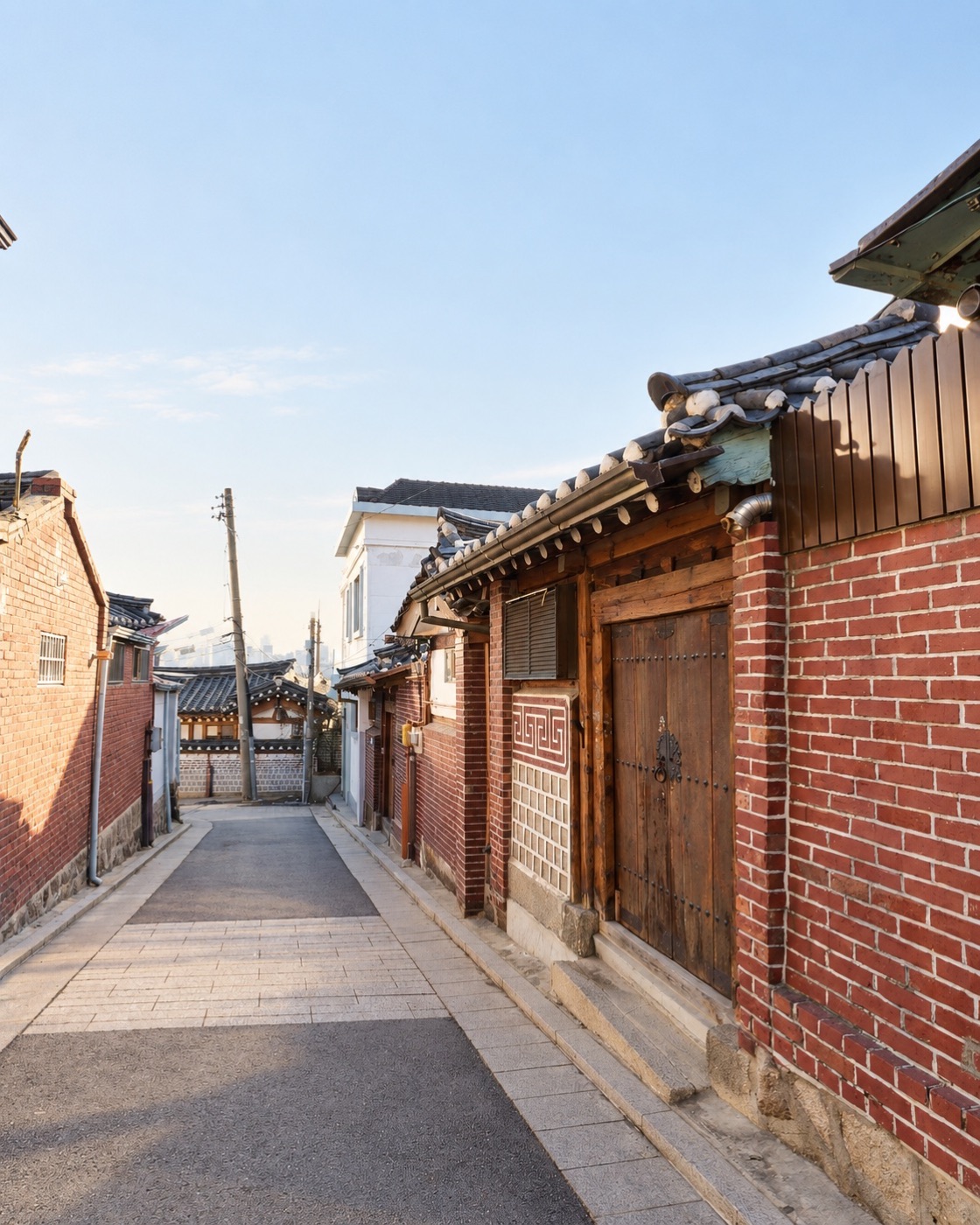 3. Gahoe-dong Hanok AlleyGahoe-dong · 1930s · City hanok
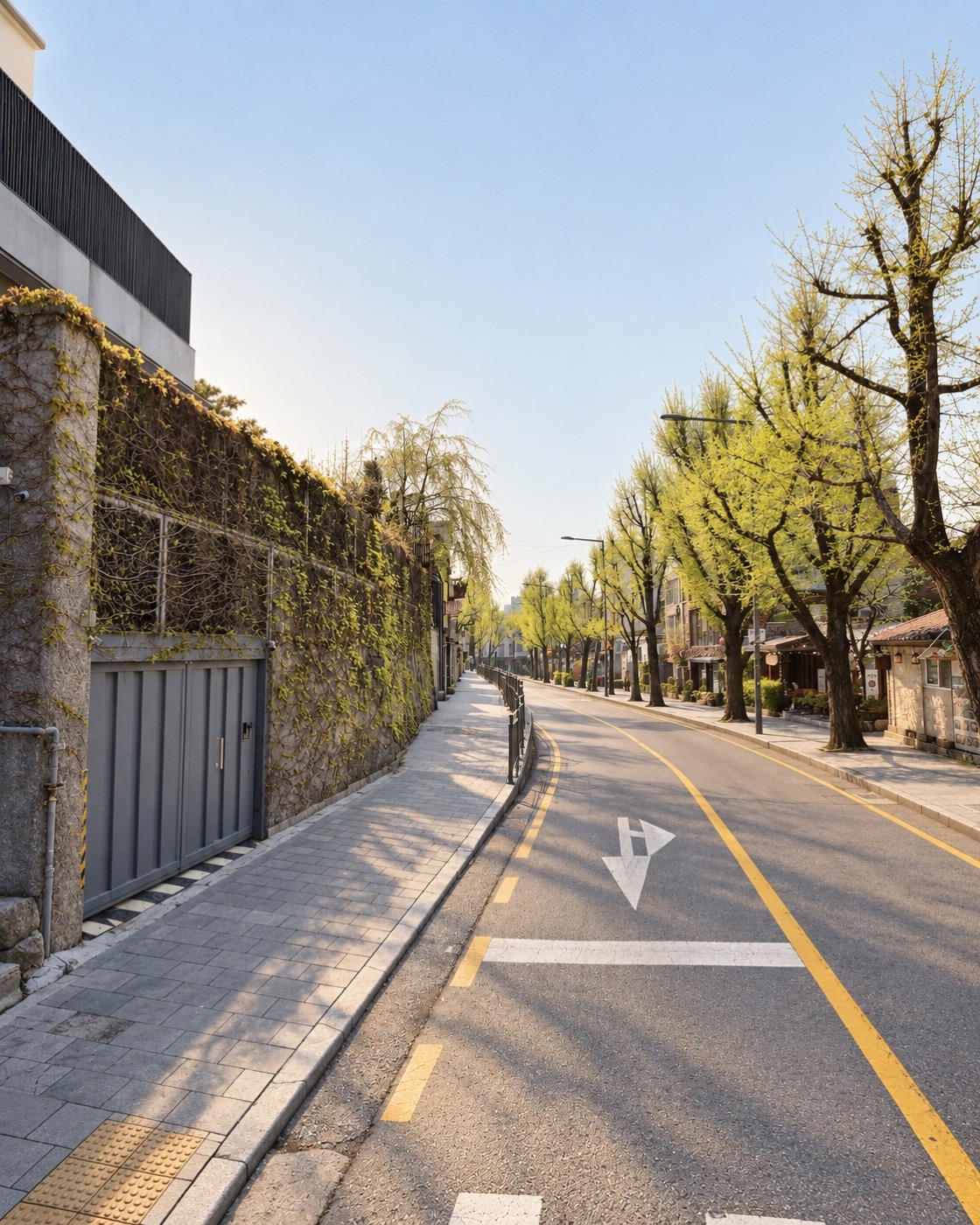 4. Samcheong-roSamcheong-dong · Street between palaces
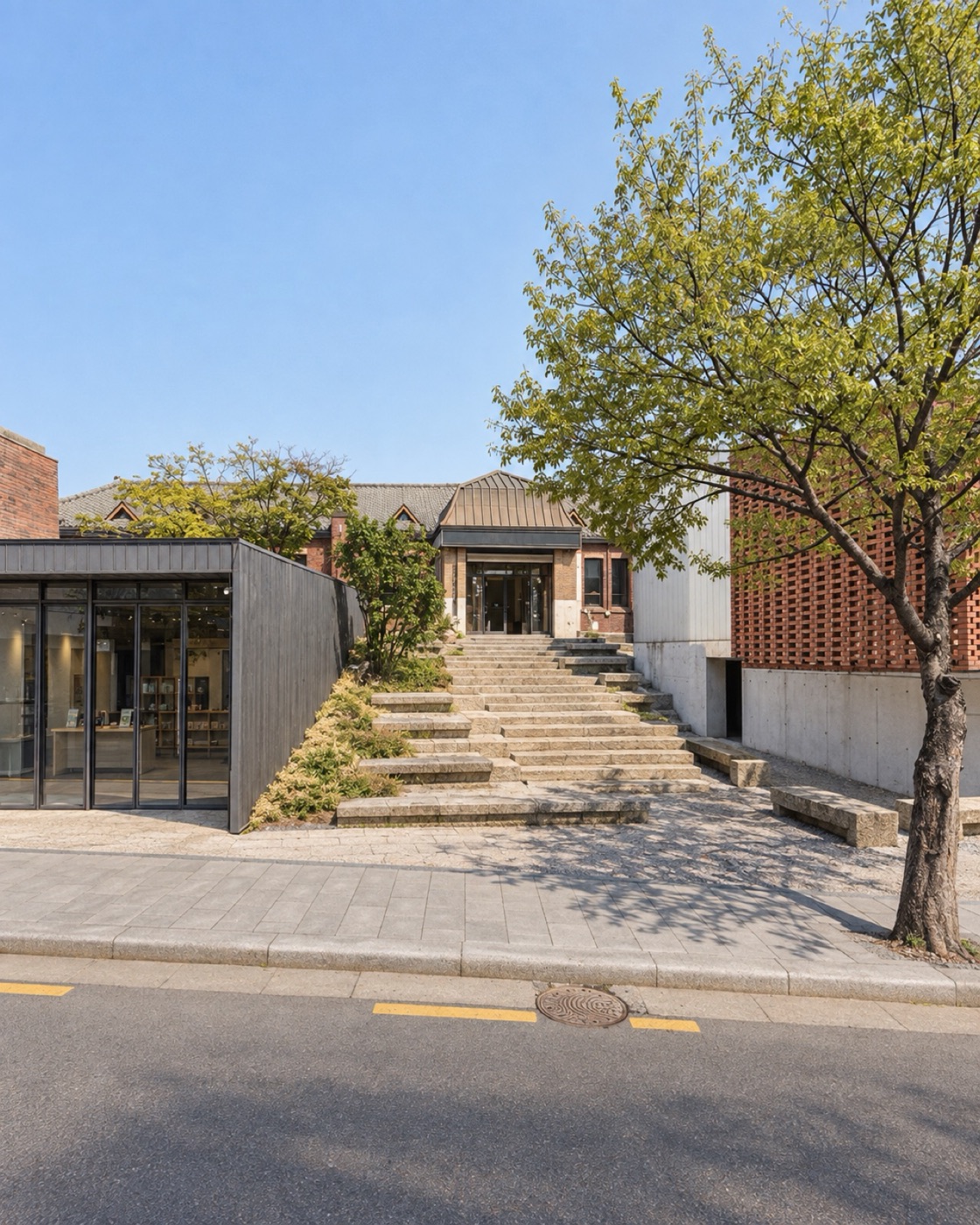 5. Jeongdok LibraryHwa-dong · Kim Ok-gyun's home site · Old Gyeonggi High
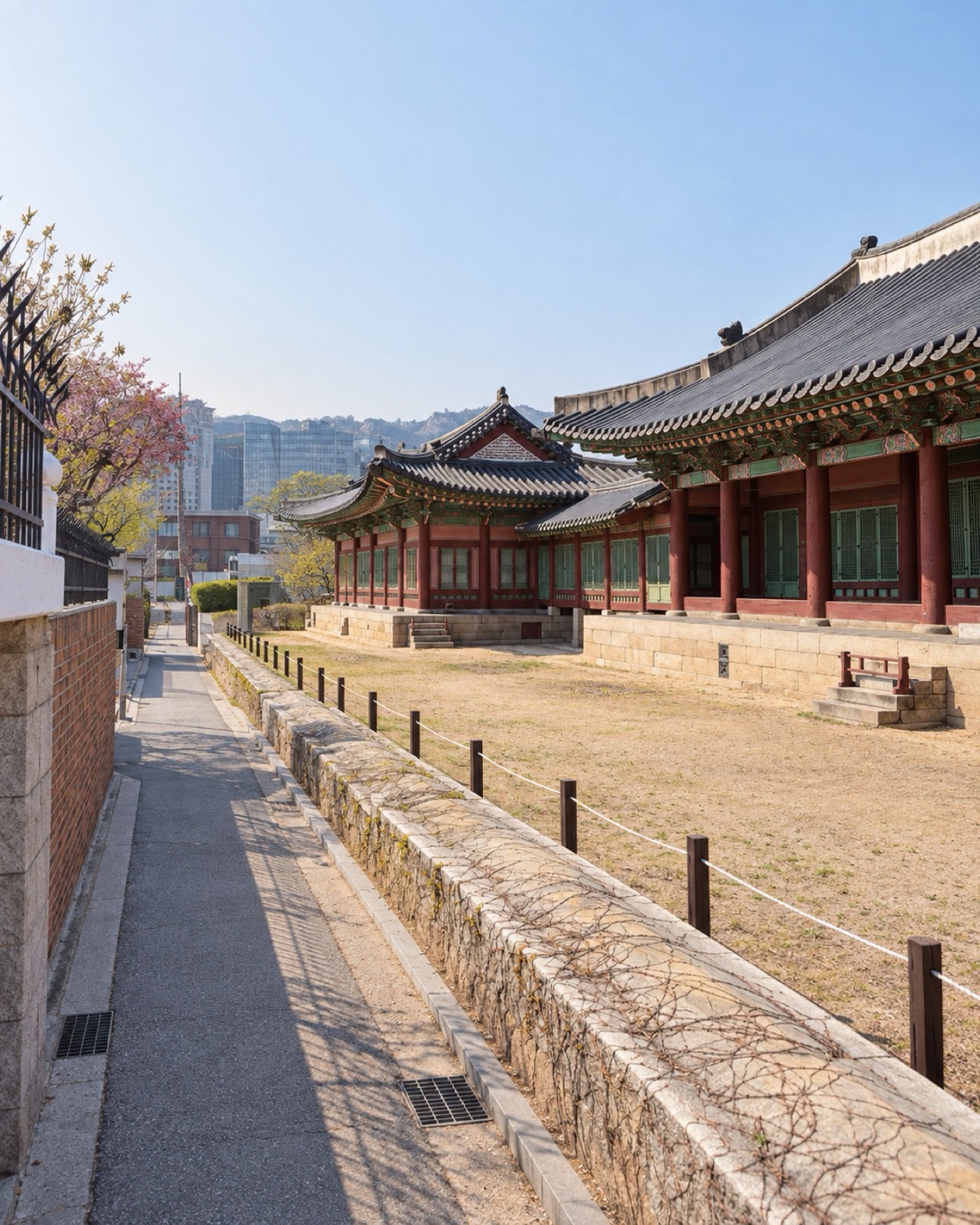 6. JongchinbuSogyeok-dong · A royal office come home · MMCA Seoul
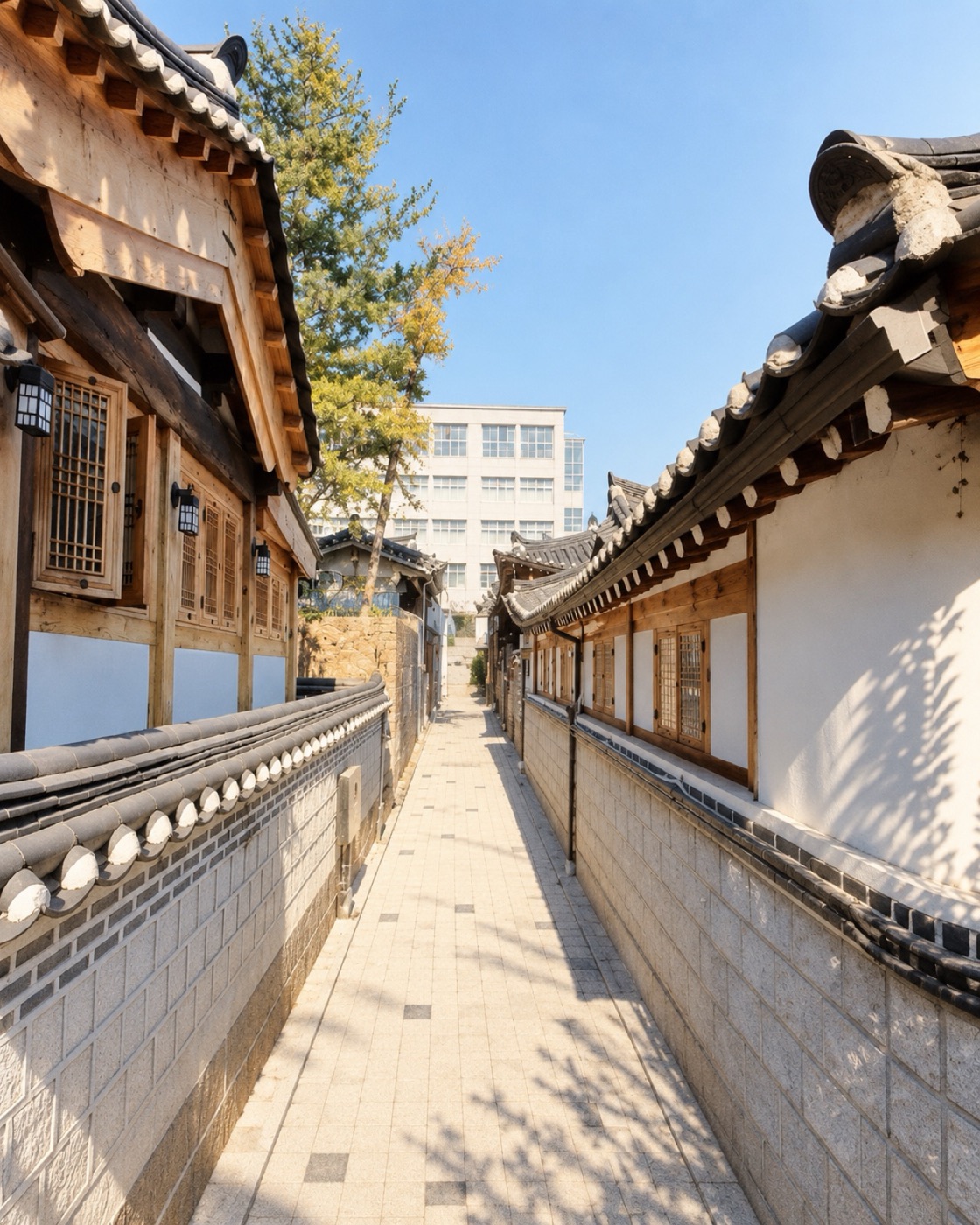 7. Seoul Museum of Craft ArtAnguk-dong · Andong Royal Villa site · Last stop
Replay any time, even offline. Stories play on their own as you arrive, with your phone in your pocket. Or choose "Listen as you walk" and let the stories find you.
Narration in English, Korean and Japanese; subtitles also in Simplified and Traditional Chinese, Vietnamese, Thai and Indonesian.