
Gyeongbokgung Palace
The days the crown changed hands
🕙 Closed Tuesdays (if Tuesday is a public holiday, it opens and closes the next weekday instead). Last entry 16:00 in Nov–Feb, 17:00 in Mar–May and Sep–Oct, 17:30 in Jun–Aug. Admission ticket not included — free if you wear hanbok. Stop 1 is outside the palace and can be heard any day.
Look at the two stone beasts on the center path in front of the gate.
Until a few years ago, they were sitting in a museum garden.
The raised stone platform under your feet is called a woldae, a kind of stage in front of a royal gate.
The platform was broken up when streetcar tracks were laid across it.
Pieces of its stone railings survived at Donggureung, a cluster of royal tombs outside Seoul.
Those stones came home, and the platform reappeared after about a hundred years.
But the stone beasts weren't among them.
They weren't underground. They were in the garden of the Hoam Museum of Art, south of Seoul.
A member of the public recognized them in a YouTube video and reported it.
A three-D scan compared them with the old bases, and the shapes matched.
The family of the late Samsung chairman Lee Kun-hee then donated them.
Take a look at their faces.
They're thought to be haetae, mythical creatures said to tell right from wrong.
A strict choice of doorman for a palace.
The gate behind them lost its place for a long time, too.
In the early twentieth century, Japan ruled Korea.
The colonial government built its headquarters right behind this gate.
The gate was nearly torn down.
People protested. Cultural figures in Japan objected too.
So instead of being demolished, the gate was moved to the palace's east wall.
After it burned in the Korean War, it stood for years as a concrete gate.
The gate you see now was rebuilt in wood, back on its original spot.
So what became of the building that pushed this gate aside, once Korea was free?
Walk through Gwanghwamun to the courtyard in front of the next gate, Heungnyemun.
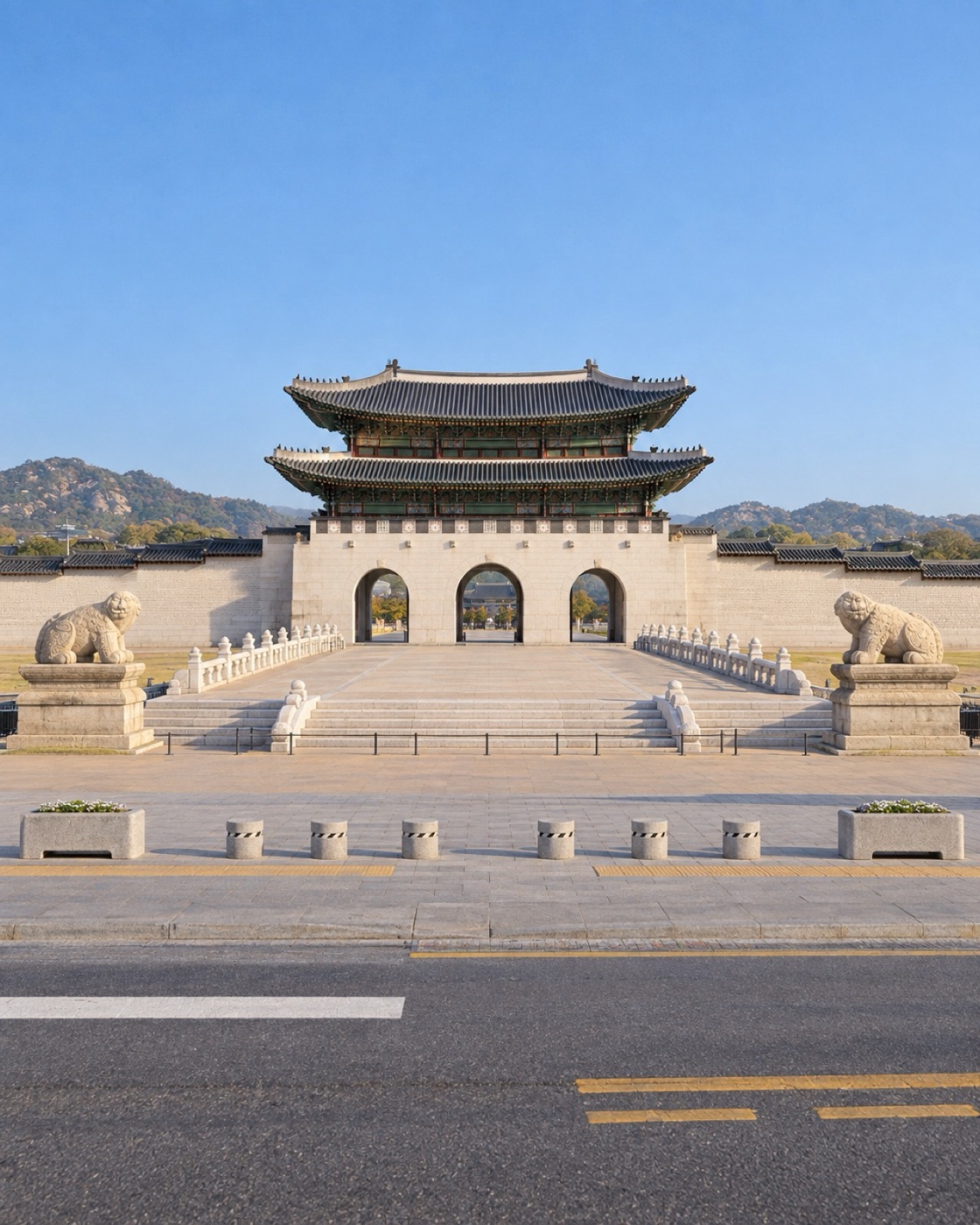 1. Gwanghwamun Gate & PlatformOutside the palace · Free · The gate that came back
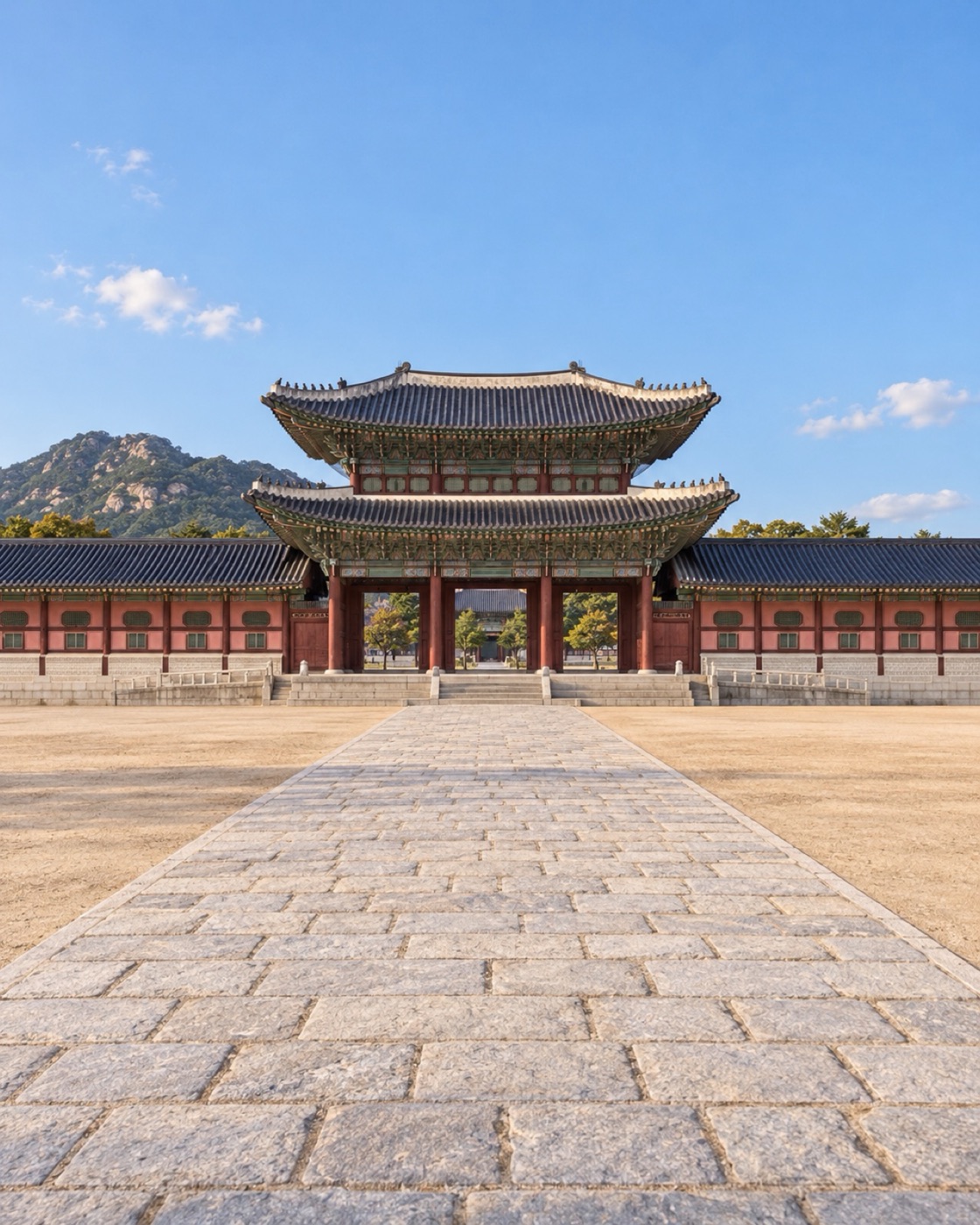 2. Heungnyemun Courtyard1926–1996 · Colonial headquarters site
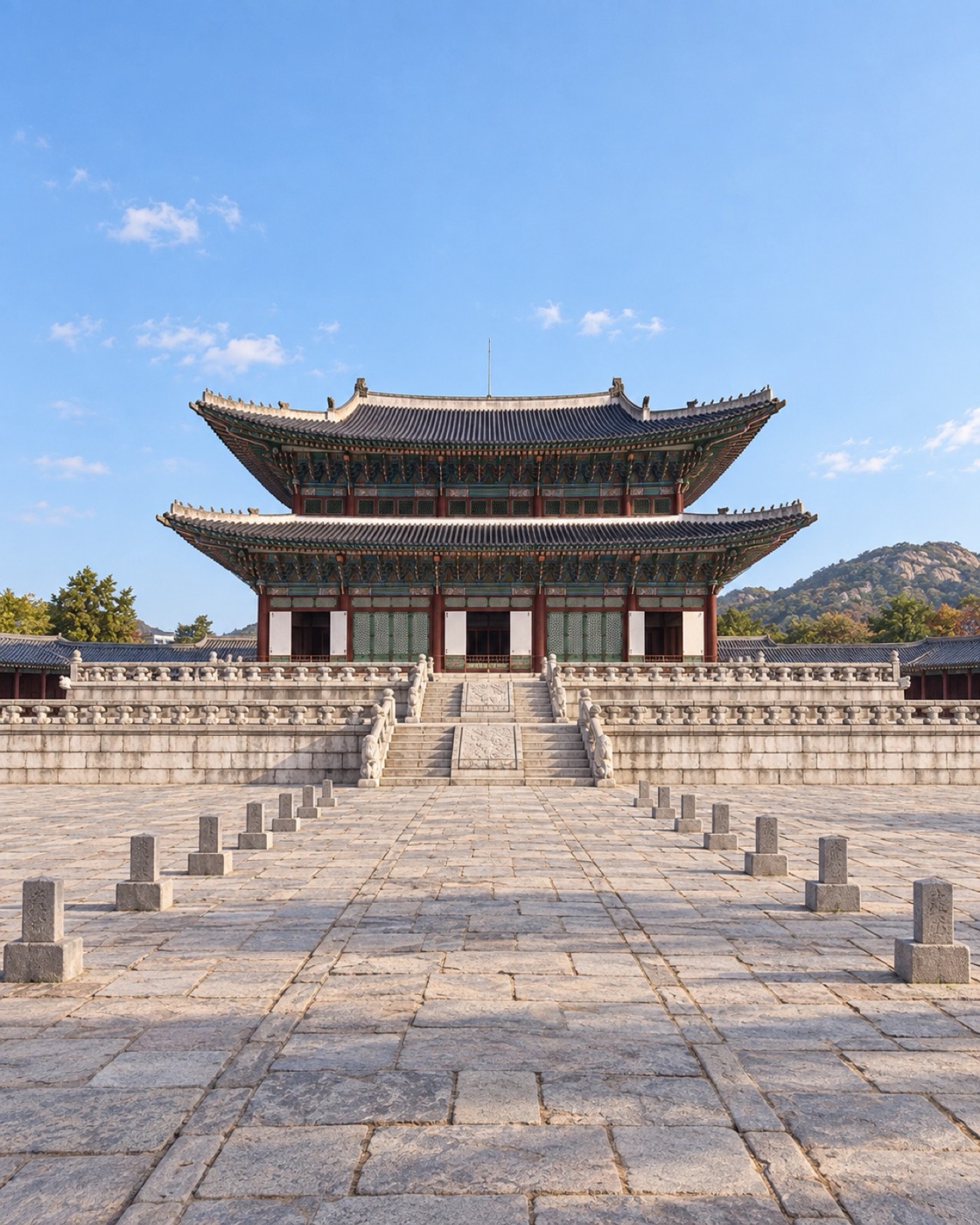 3. Geunjeongjeon Throne Hall1395 · Named by Jeong Do-jeon
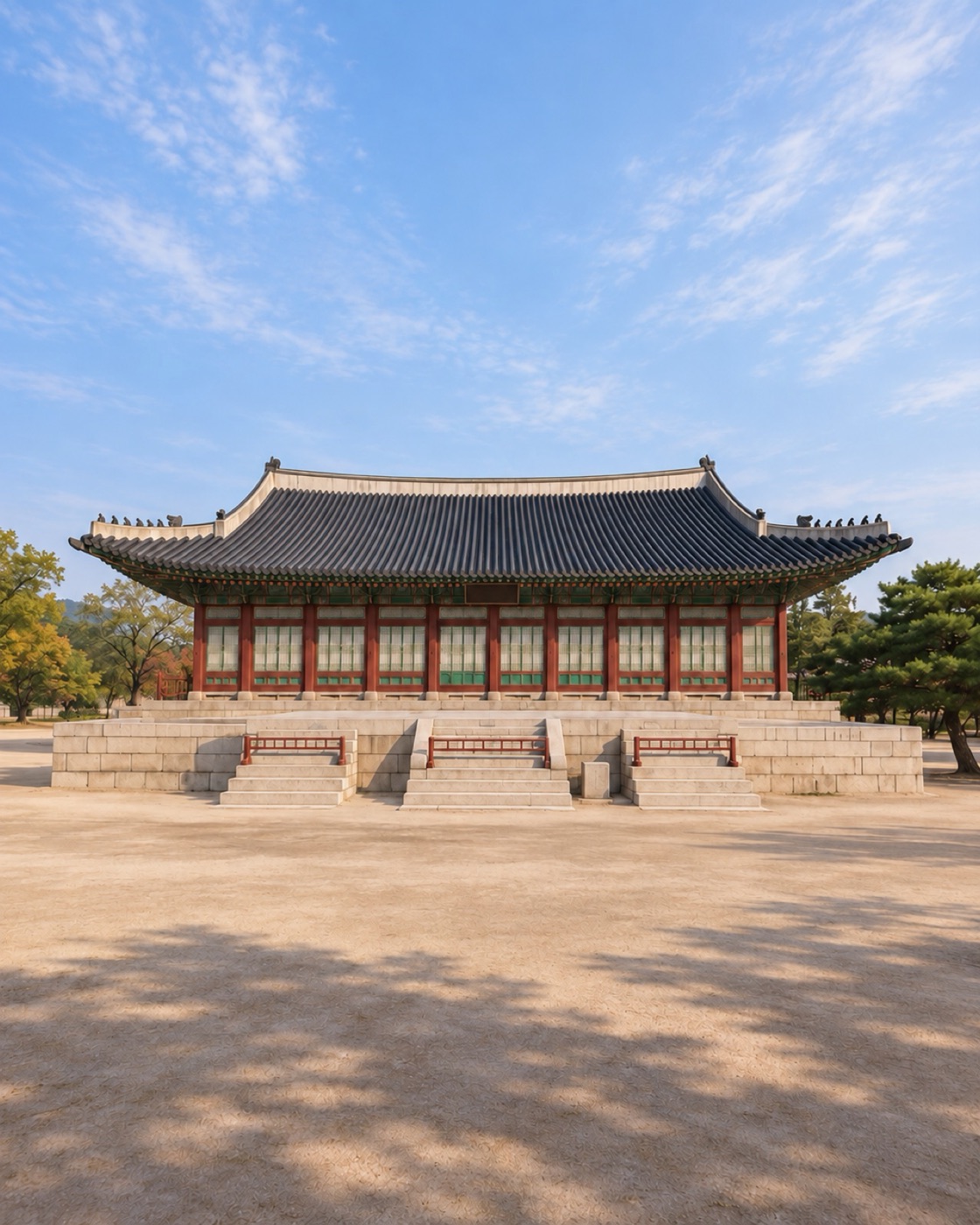 4. Sujeongjeon HallSite of the Hall of Worthies · Hangeul
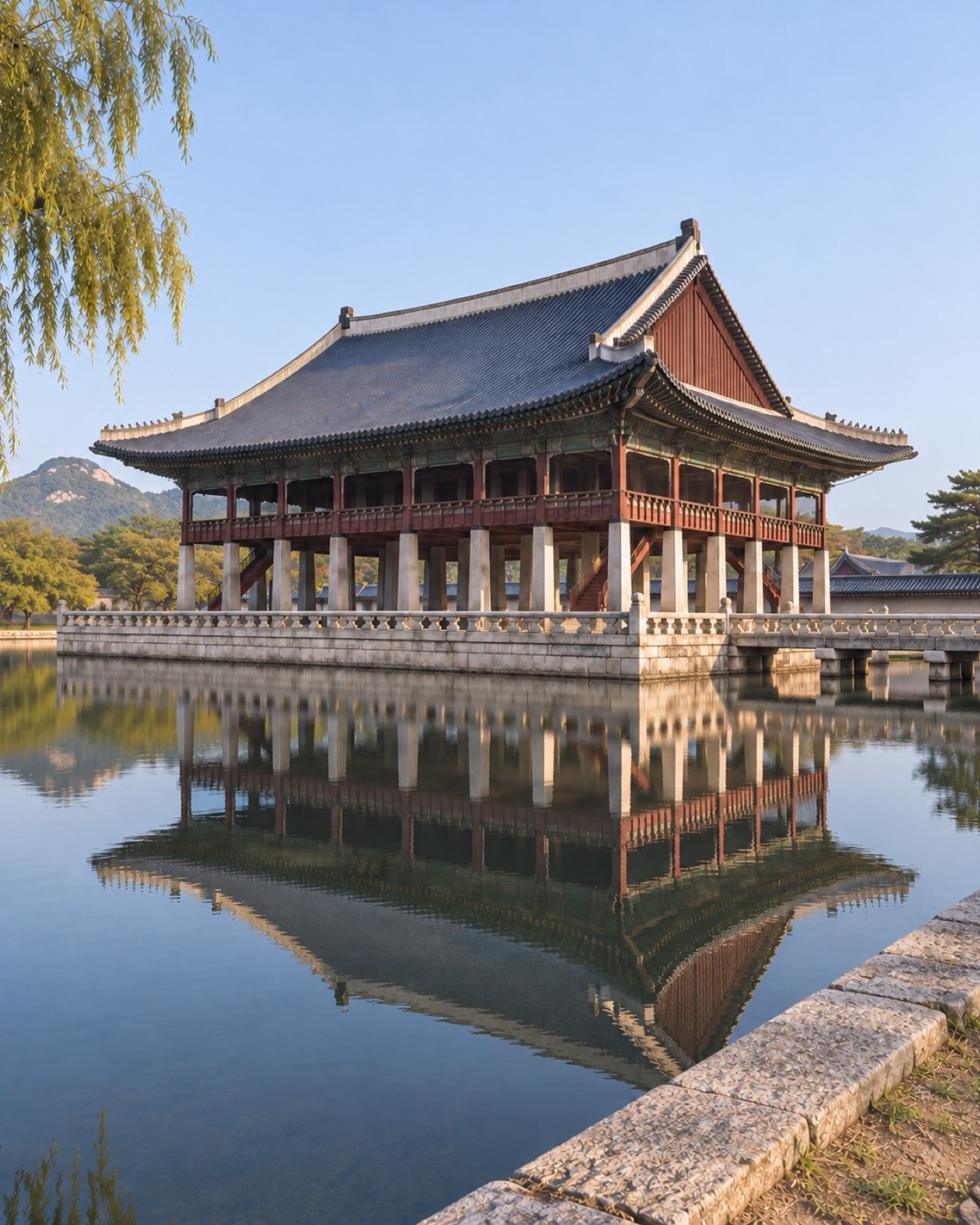 5. Gyeonghoeru Pavilion1455 · A boy king hands over the seal
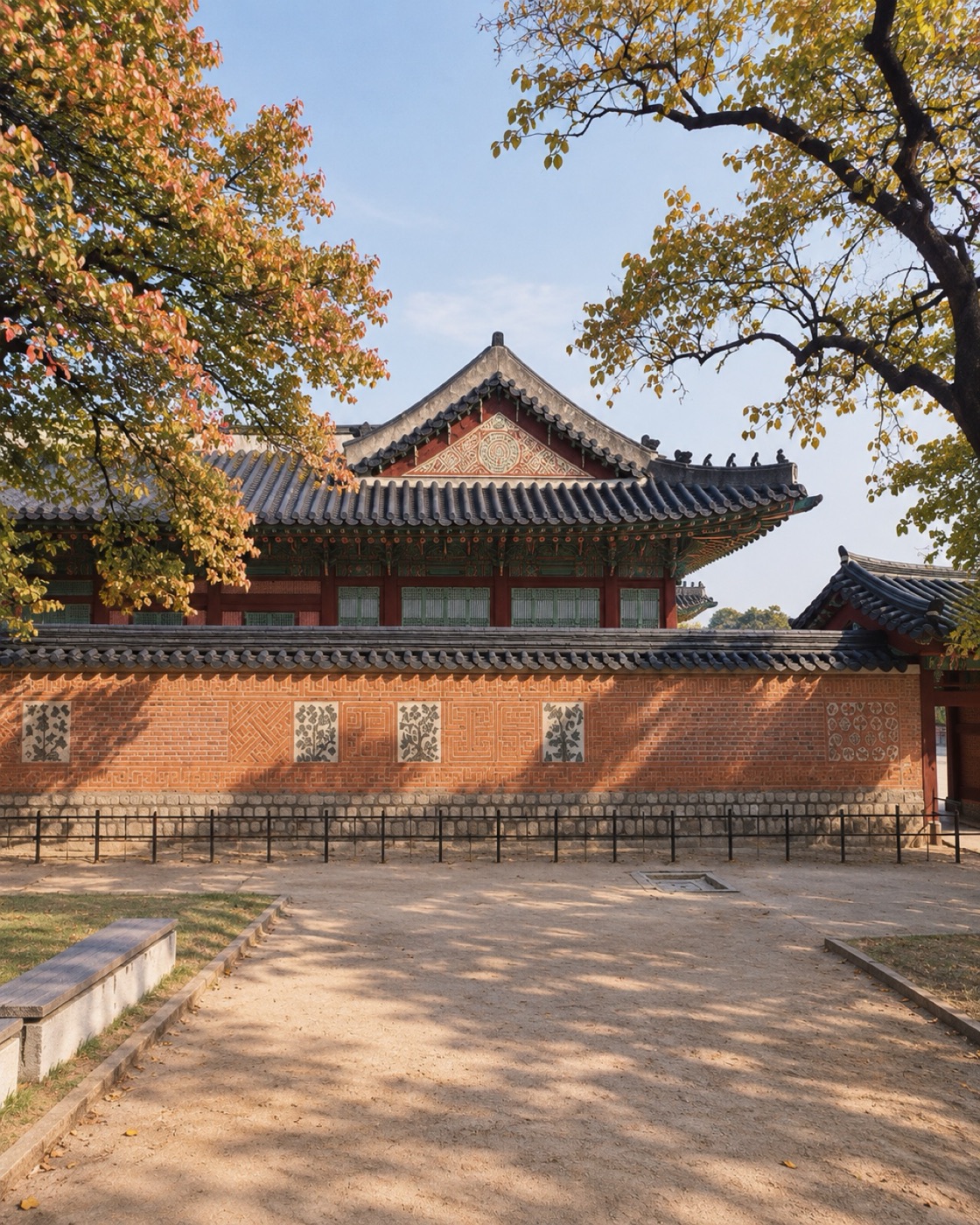 6. Jagyeongjeon Hall1867 · The queen dowager's flower wall
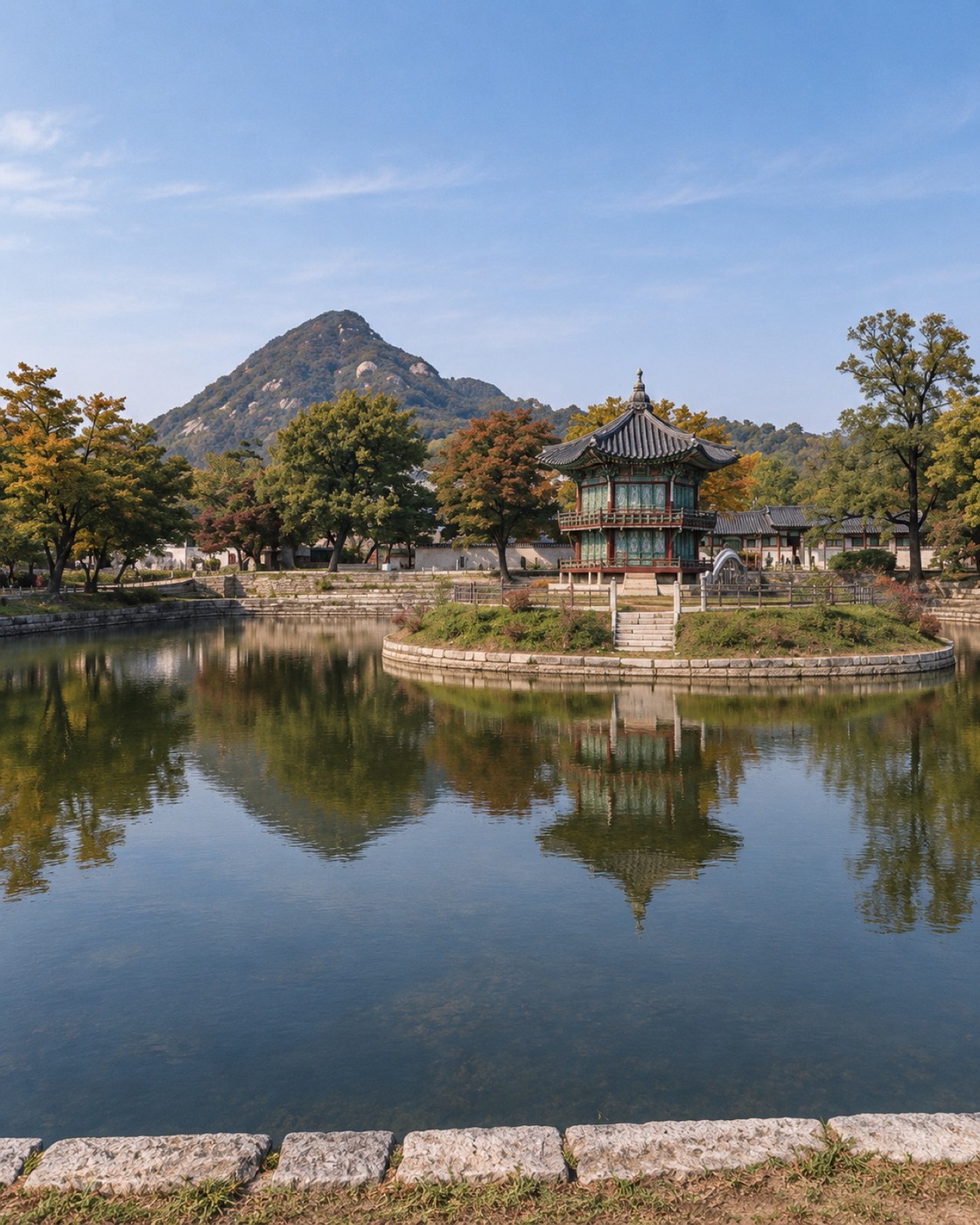 7. Hyangwonjeong Pavilion1887 · Korea's first electric light
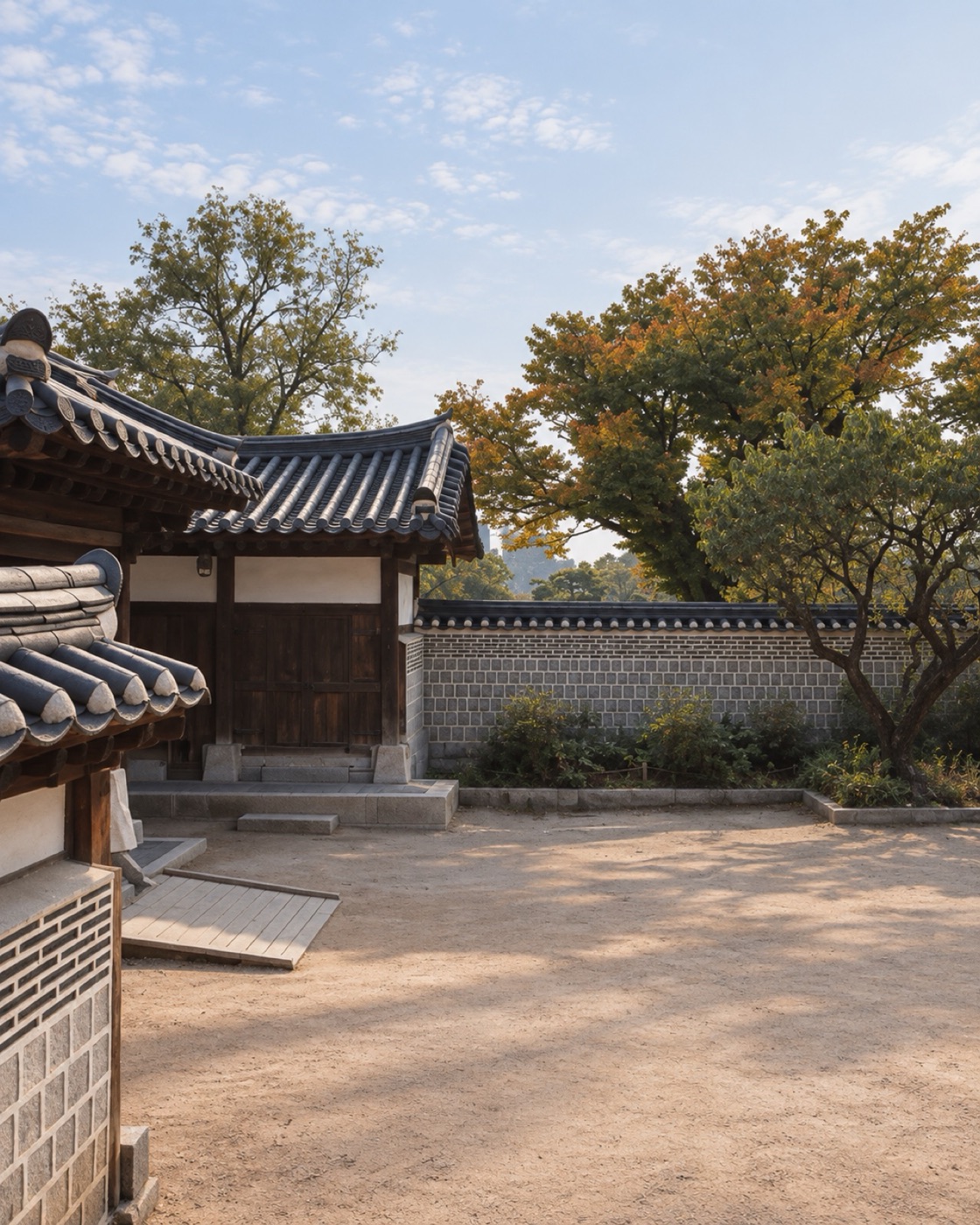 8. Geoncheonggung Residence1895 · The queen's last dawn
Replay any time, even offline. Stories play on their own as you arrive, with your phone in your pocket. Or choose "Listen as you walk" and let the stories find you.
Narration in English, Korean and Japanese; subtitles also in Simplified and Traditional Chinese, Vietnamese, Thai and Indonesian.